ChrisField Craft
Launch promo ends in 00:00:00
Get the Old Campers’ Manual — $47 $27
Chris Old Camper, Field Craft

Camping stopped being something you knew how to do, and became something you bought.

One hundred methods out of the notebook my grandfather kept — fire, water, shelter, cooking, bugs, weather, tools, light, finding your way, and what to do when it all goes wrong. Every one of them cheap, most of them free, and not one of them needs batteries.

Instant download · Yours forever
100Methods
10Sections
146Pages
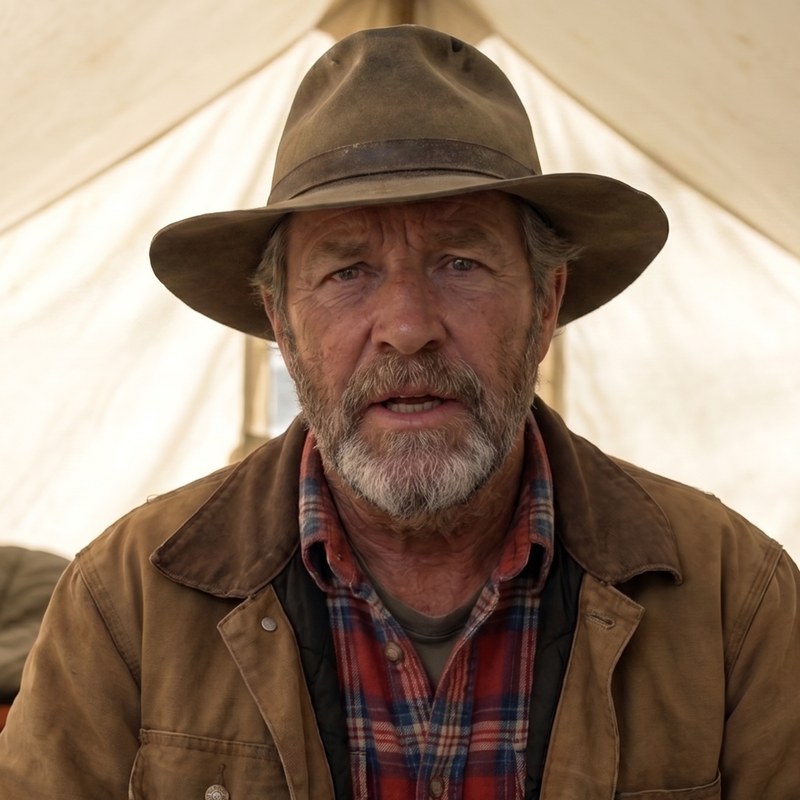
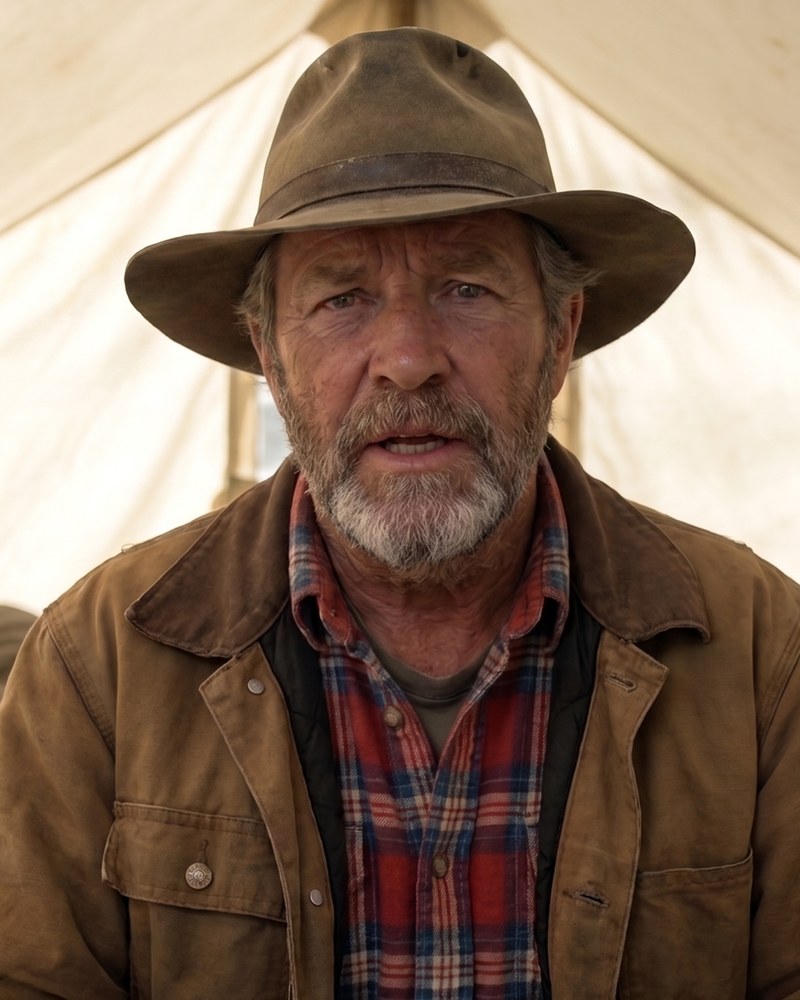
Chris, in a canvas wall tent

“The knowledge was the equipment, and it did not wear out, rust, expire or need batteries.”

— Before You Begin, p.4
The Old Campers' Manual, first edition
Move your cursor over the book — or give it a click
Section I The Manual

My grandfather’s notebook, finished and put in order.

It was a cheap thing, the kind you buy at a hardware store, and by the time it came to me the cover was gone and the pages were soft as cloth. There was almost nothing personal in it at all. It was a hundred-odd pages of how to do things — how to keep a fire in overnight, how much bleach goes in a canteen, which stones will burst if you heat them and which will not.

What struck me, reading it as an adult, was how much of it was about money. He simply took it for granted that the point of knowing how to do something was that you did not then have to buy it. A man who could make cordage did not buy rope. A man who could bank a fire did not buy fire starters.

“A person with three thousand dollars of equipment and no skill is having a much worse time in the rain than a person with a tarp and a working knowledge of knots.”

— The Old Campers’ Manual, p.4

So this is a hundred of those methods. Some are genuinely old — the reverse wrap for cordage is thousands of years old, the tinderbox and the char tin were in every household two centuries ago. Others are simply things that used to be common knowledge and quietly stopped being taught.

Every method is laid out the same way, so once you have read two of them you can find anything in any of them without hunting: what it needs, what it costs, the numbered steps — and what it will not do. That last box is the most important one on the page, and it is the one people skip.

Section II The Difference

There is a product for everything out here.

A great many of them are very good. I own some. But the gear aisle solves a problem once, for money, every season — and a method solves it for good.

The way the gear aisle sells it

  • A $14 pack of fire starters, bought again every season
  • $40 on a filter cartridge that clogs, and a vague idea of what it removes
  • A $200 bag that still sleeps cold, so you shop for a warmer one
  • $9 a can of spray, reapplied every two hours, and bites anyway
  • A drawer of dead headlamp batteries and a phone at 4%
  • Advice off a forum, no source, no limits, no idea when it fails

The way the manual teaches it

  • The feather stick off any dead branch, and char cloth in a tin. Free, from wood you are standing on. Methods 1–2
  • Clear first, then treat — and the one step nobody may skip. The sand filter is a preparation, not a purification. Methods 11–16
  • Fix the ground first. The bough bed, warm ground, and sleeping warm in the bag you already own. Methods 27–29
  • The smudge can, cloth over spray, and pitching the tent where the bugs are not. Methods 41–43
  • The water-jug lantern and the fat lamp, plus a light plan that survives the cold. Methods 71–80
  • Every method ends with what it will not do — the limits, the failure modes, and the honest warning. All 100
Section III What’s Inside

One hundred numbered methods, in ten sections.

Read it in order the first time. Then keep it in the truck.

I

Fire

001–010

Getting one lit, keeping it useful, and putting it dead out.

The Feather Stick · Char Cloth in a Tin · Reading Tinder: The Three Stages · The Teepee and the Log Cabin · The Upside-Down Fire · The Dakota Fire Hole · The Reflector Wall · Wet Weather Fire: Splitting to the Dry Heart · Banking a Fire to Live Till Morning · Putting a Fire Dead Out

II

Water

011–020

Finding it, clearing it, and the one step nobody may skip.

Where to Take Water From · Clearing Before Treating · The Layered Bottle Filter · The Rolling Boil · Bleach and Tablets, Done Correctly · The Sun Method · The Transpiration Bag · Catching Rain and Dew · Carrying It and Keeping It Clean · The Pin-Hole Wash

III

Shelter and Sleep

021–030

A dry night, a warm night, and the ground underneath both.

Choosing the Ground · The A-Frame Tarp · The Lean-To · The Diamond Pitch · Pitching for Wind · The Debris Hut · The Bough Bed · Warm Ground · Sleeping Warm in the Bag You Own · The Camp Triangle

IV

Cooking

031–040

Hot food from a can, a stick, a stone and a bed of coals.

The Three-Hole Can Stove · Cutting the Holes Right · The Pot Crane · Cooking on Coals, Not Flames · The Reflector Oven · Bread on a Stick · The Stone Griddle · One Pot and the Trail Pantry · Coffee Without a Filter · Washing Up With Almost No Water

V

Bugs, Beasts and Bites

041–050

Smoke, cloth, distance, and knowing what actually matters.

The Smudge Can · Pitching Away From the Bugs · Cloth Beats Spray · Tick Checks and Removal · Netting You Make Yourself · Ants, Wasps and Sweet Things · Hanging Food · Rodents in the Pack · Chiggers, No-See-Ums and the Dusk Rule · Snakes: What to Actually Do

VI

Cold, Wet and Heat

051–060

Staying ahead of weather instead of reacting to it.

The Three Layers · The Two-Sock System · Drying Clothes Without a Fire · Reading Your Own Cold · Warming a Cold Person · Heat and Hard Days · The Wind Chill Rule · Rain Camp Discipline · The Shelter That Rains Inside · Frost, Ice and the Bottle Trick

VII

Tools, Cord and Repair

061–070

The few things worth carrying, and how to keep them working.

The Knife You Actually Need · Sharpening in Camp · The Axe and the Saw · Cordage From Plants · The Taut-Line Hitch · The Trucker’s Hitch · The Bowline · The Repair Pouch · Patching Fabric in the Field · Camp Furniture From Sticks

VIII

Light and Camp Power

071–080

Seeing after dark without spending a fortune on it.

The Water-Jug Lantern · The Fat Lamp · Candle Discipline · Batteries and the Cold · Keeping the Phone Alive · The Red Light Rule · The Fire as Light · Finding Camp in the Dark · Charging Without a Wall · The Light Plan

IX

Finding Your Way

081–090

Sun, stars, land and the habit of knowing where you came from.

The Shadow Stick · The Watch Compass · Finding North at Night · Reading the Land · Pacing and Distance · The Map and Compass, Honestly · Marking the Back Trail · Water Runs Downhill · The Moment You Realise You Are Lost · The Note You Leave Behind

X

When It Goes Wrong

091–100

The unplanned night, the signal, the injury, the walk out.

Taking Stock · The Ground Signal · Mirror, Whistle and Sound · The Rescue Fire · Blisters and Small Wounds · Getting Out on One Leg · Water When You Have None · Stay or Walk · The Cold Night Without a Bag · Coming Home
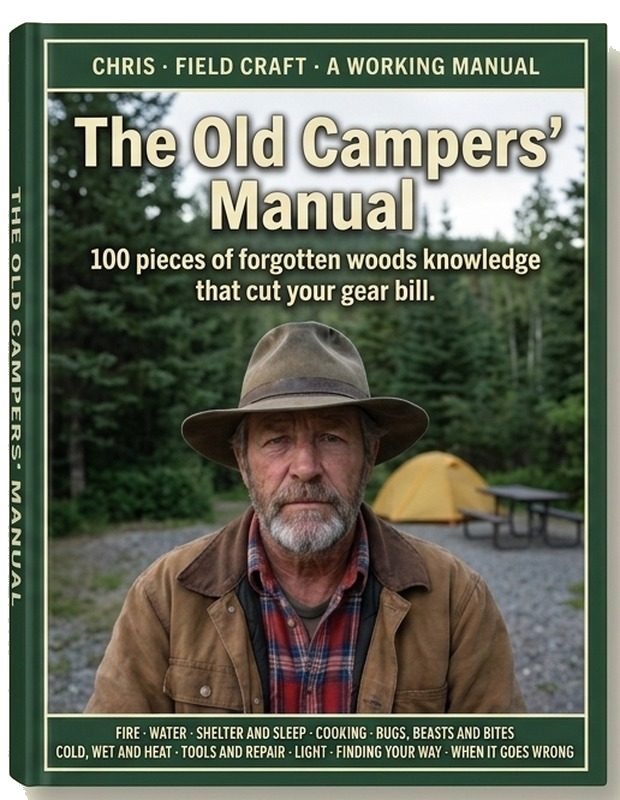
And at the front and back of the book

The Quick-Start Road Map — eight reading paths for eight kinds of trip, so you are not meeting a hundred methods all at once. The Camp Ledger for keeping your own running total of what each method saved you, and the Materials Sourcing Sheet for the handful of things worth buying.

Get the Old Campers’ Manual — $47 $27
Instant download · Yours forever
Section IV Reader Results

What people write in after a weekend with it.

★★★★★

“Method 27 and 28 alone. Forty years I have blamed the sleeping bag, and it was the ground the whole time. First warm night I have had in a tent since I was a boy.”

Dale R. · Verified reader
★★★★★

“I bought this for my husband and ended up reading the whole thing myself. The ‘what it will not do’ box is the part I trust. Nobody else tells you where a trick stops working.”

Marianne T. · Verified reader
★★★★★

“Took the grandkids out with the road map for ‘I am taking the kids’. Feather stick, char tin, bread on a stick. They have asked to go back every weekend since.”

Chris
Section V About

I am Chris. I have been sleeping outside a long time.

Long enough to have owned the expensive version of nearly everything and to have quietly given most of it away. I am not a survival instructor and I am not selling you a lifestyle. I am a man with a hat, a wall tent, and a grandfather who wrote things down.

Two things I want you to know about this book before you buy it. The first is that every price in it is a rough guide, not a shop quote — treat them as an argument, not an invoice. The second is that I have corrected the old advice where the old advice was wrong.

You will find me telling you that a match held to a tick makes things worse, that cutting a snake bite is dangerous, that following a stream downhill kills people in canyon country, and that the famous sand-and-charcoal filter is a preparation step and not a purification method. Those are not opinions. Where the modern guidance is better, I have given you the modern guidance, and said so.

Everything else — the feather stick, the upside-down fire, the bough bed, the smudge can, the pin-hole wash, the shadow stick — works exactly as well as it ever did, because the woods have not changed and neither have people.

ChrisFirst Edition · MMXXVI
Section VI Order

The whole notebook, for less than a bag of firewood at the campground.

The Old Campers’ Manual

First Edition · 100 Methods · 146 Pages

What you get

  • The complete 146-page manual as an instant PDF download, first edition
  • 100 numbered methods across ten sections, cross-referenced to each other
  • Every method with what you need, real prices, numbered steps, and what it will not do
  • The Quick-Start Road Map — eight reading paths for eight kinds of trip
  • The Camp Ledger and the Materials Sourcing Sheet at the back of the book
  • Reads on a phone, a tablet, a computer, or printed and kept in the truck
The Old Campers' Manual
$47$27
Launch promo · ends at midnight
Get the Old Campers’ Manual — $47 $27
Instant download · Yours forever
VisaMastercardAmexPayPal
Section VII Questions

Questions I get asked.

Is this just old-timer stuff that does not work anymore?

Some of it is genuinely old. The reverse wrap for cordage is thousands of years old. The tinderbox and the char tin were in every household two centuries ago. The reflector wall was standard in every winter camp in this country.

But I have not left the old advice in for the sake of tradition. Where it was wrong, I have corrected it and said so — the match on a tick, cutting a snake bite, following a stream downhill, the sand-and-charcoal filter. Everything else works exactly as well as it ever did, because the woods have not changed and neither have people.

Your videos are free. Why would I buy the manual?

Because a video is one method, once, and you cannot find it again at ten at night in the rain with a dead phone.

The manual is a hundred of them in order, numbered, cross-referenced, with the materials and the prices and the limits written down next to each one. It is built to be looked things up in, not watched. That is a different object, and I could not make it as a video if I tried.

Why only $27 for the whole thing?

Because the book is about not spending money, and I would feel foolish charging like a gear company for it. $27 is roughly a bag of firewood and a bundle of fire starters at a campground — and the manual replaces both of those on the first trip.

$47 is where it settles after the launch promo. There is no other edition and no upsell behind it.

What format is it, and do I need an app?

It is a PDF. No app, no account, no subscription. You get the download the moment you pay, and it opens on a phone, a tablet, a laptop or a library computer.

Plenty of readers print it and keep it in the truck, which is what I would do. It is laid out for that.

I have camped for thirty years. Is there anything in here for me?

Honestly, less than there is for a beginner — and I would rather say so than pretend otherwise. But the sections most experienced campers get the most out of are VI, IX and X: reading your own cold before it gets interesting, marking the back trail, and the honest decision about whether to stay or walk.

And if you have never made cordage from a plant standing next to your tent, Method 64 is worth the price on its own.

Can I rely on this instead of proper training?

No, and I say so in the front of the book. This is offered for general education and enjoyment. It is not medical, legal or professional safety advice, and it is not a substitute for hands-on training.

Camping, fire building, water treatment, tool use and travel in wild country carry real risk. Follow local laws, land-manager rules, fire restrictions and manufacturer instructions, and get qualified instruction in wilderness first aid and navigation before you lean on any skill in this book.